
Many people have a dream about leaving the bright lights of a city behind, lowering their monthly bills and living off the grid in the countryside. There are books, Instagram posts, tiny home documentaries, entire YouTube channels and more on this topic. This may seem simple, but it’s complex and it requires a great deal of creativity, planning and patience to make an off grid life work for you.
Sustainable and Reliable Water Sources
We rely on water and if you’ve never evaluated the volume of water that you need to use every day, it can be surprising. With no access to clean and reliable water, there is no way to drink, cook, clean, wash and water a garden.
There are four stages of water planning to consider: sourcing, collection, storage and water treatment.
Water Sourcing
The first place to start is where the water will come from and there are four major sources to consider.
Water Wells
These are the go-to when it comes to off-grid water because they are reliable for a year-round water supply. The well depth is dependent on the depth of the local water table.
A shallow well is less than 25 feet deep and a deep well can be 100 feet deeper or more. A shallow well can dry out during droughts, and a deeper well is more consistent but it will cost more to drill to deeper depths. Check before drilling because certain areas require permits and compliance with local water regulations.
The water quality can vary depending on the bacteria, minerals and other contaminants that may be present. This is why annual water testing is crucial and this is especially true for water that you intend to drink and cook with.
Getting the well water to the surface will require some kind of pump system. The most basic choice is a manual hand pump, but the best option for full-time living is a submersible or solar-powered electric pump. That said, a manual pump is a great low-tech backup for emergency use.
Rainwater Harvesting
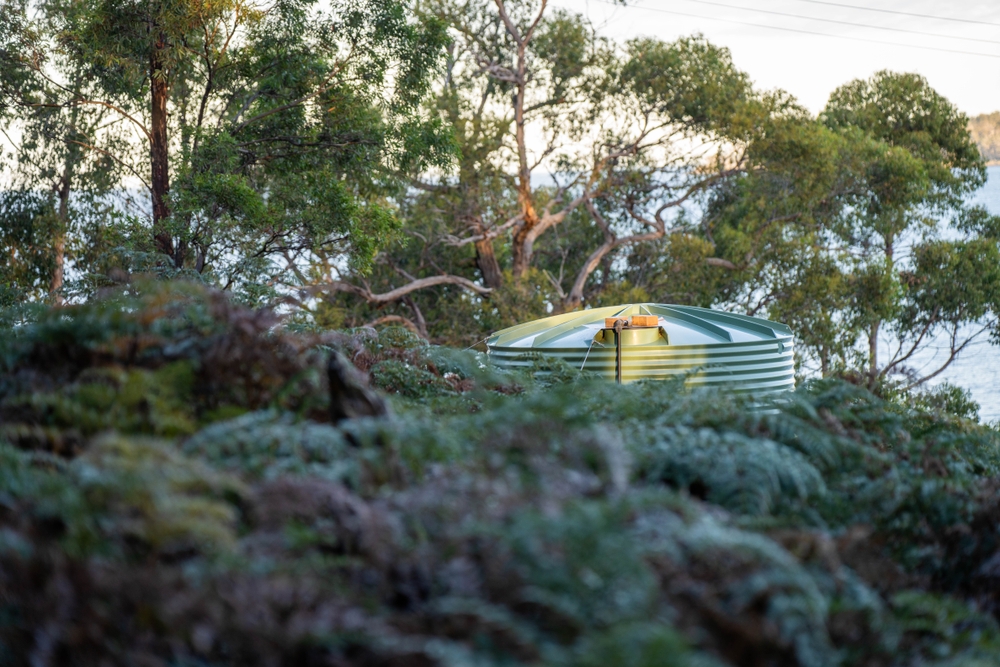
This is an eco-friendly option, but it’s dependent on the weather which isn’t always cooperative. To make this work, a catchment surface such as a roof with gutters to direct the water into storage tanks is needed. The materials on the roof are important, a metal roof is desirable because asphalt can leach chemicals into the collected water. Rainwater is pretty clean, but it must be filtered to remove debris and treated with chlorine, UV-light or with boiling to make it safe for drinking. A larger storage tank that can hold thousands of gallons may be needed to reduce the dependence on rainfall. In certain areas, a seasonal drought may make a backup water system a necessity.
Streams, Rivers and Lakes
A natural surface water source can be an excellent way to get water for off-grid living. But, it’s important to check that the water is legally accessible and that the flow of water is reliable. Basing your water system on a river that dries up in summer will mean that you need a secondary water source and water storage tanks.
Surface water is very prone to contamination and a multi-step filtration system is a must. The best place to place the water intake is upstream and away from stagnant pools. Add a pre-filtration screen to remove any debris and leaves to make filtration easier.
Natural Springs and Water Sharing
A natural spring can provide a home with high-quality water direct from an aquifer. But, the flow of water can vary a great deal depending on the rainfall in the area. In certain rural communities there may be legal and sustainable water sharing.
Water Collection
The water collection method you choose will be determined by the water source. What are the three most popular methods and how are they used?
- Gravity-Fed: These are simple to maintain and the energy consumption is low. They reduce the need for pumps because the collected water flows down to irrigation lines and faucets. They are a viable system to use with natural springs, wells and elevated water storage tanks.
- Water Pumps: These require electrical power to use, this can be wind, solar, battery or a backup generator. These systems work well with deep wells, pressurized systems and distant water sources.
- Manual Collection: These require no energy to use, they are a great backup system, but they are tiresome to use on a day-to-day basis.
Water Storage
After collection, water needs to be stored properly. Aim for 1-1.5 gallons per person per day to cover drinking, cooking and hygiene requirements. Take this volume and multiply it by the number of days of water that you wish to store.
The storage tanks should be made from plastic, steel or fiberglass and each has pros and cons to consider. The storage tanks must be shaded to prevent the growth of algae and elevating them will aid gravity flow and reduce the risk of contamination.
For emergency storage, use portable and compact water barrels and bladders. For a reserve, keep bottled water or collected spring water in a dark and safe location.
Water Treatment
Even if the water looks clean, it can still contain bacteria, sediment, chemicals and other contaminants. So, it’s important to treat your water prior to storage to stay safe and healthy.
Use sediment filtration as the first stage to remove large particles, sand and leaves. Follow up with carbon filtration to remove certain organic contaminants, bad odors and chemicals. Adding a UV treatment stage is the best way to kill bacteria, viruses and other harmful microorganisms.
Boiling water is effective in the short-term, but the time and energy required to boil large volumes of water relegates it to emergency-use. Adding a drop of iodine or chlorine to water is another effective method in an emergency, but the dosing must be precise.
To summarize, an effective multi-stage filtration setup would be: sediment filter, carbon filter and UV-C light or chemical treatment to finish. Keep spare filters and UV-C bulbs on-hand for critical water treatment systems.
The Real Benefits of Living Off the Grid
Off-Grid Power
A consistent source of power is probably the greatest challenge when it comes to off-grid living. Modern off-grid homes must have carefully planned energy systems that are designed with safety, comfort and reliability in mind.
Essentially, you will be creating a small utility company where you will generate, manage and store your own energy. To make this work, you need to understand your energy requirements, select your power generation system(s), choose your batteries and make these elements work together.
How to Understand Your Energy Requirements
Make a list of your appliances and devices and calculate daily energy consumption. Take the wattage and multiply it by the hours of daily use to find the amount in Wh or kWh.
A simple example: 5 LED lights x 10W each x 5 hours use = 250 Wh/day. When you’ve done this for all your devices, add 20-30% as a safety margin. To improve accuracy, track these calculations over a few months to prevent under or over-sizing your systems.
Power Generation Systems
There are a number of off-grid power options, but most setups include a combination of power sources to ensure that the power supply is reliable. There are four main options to consider: solar, wind, hydropower and backup generators.
Solar Power
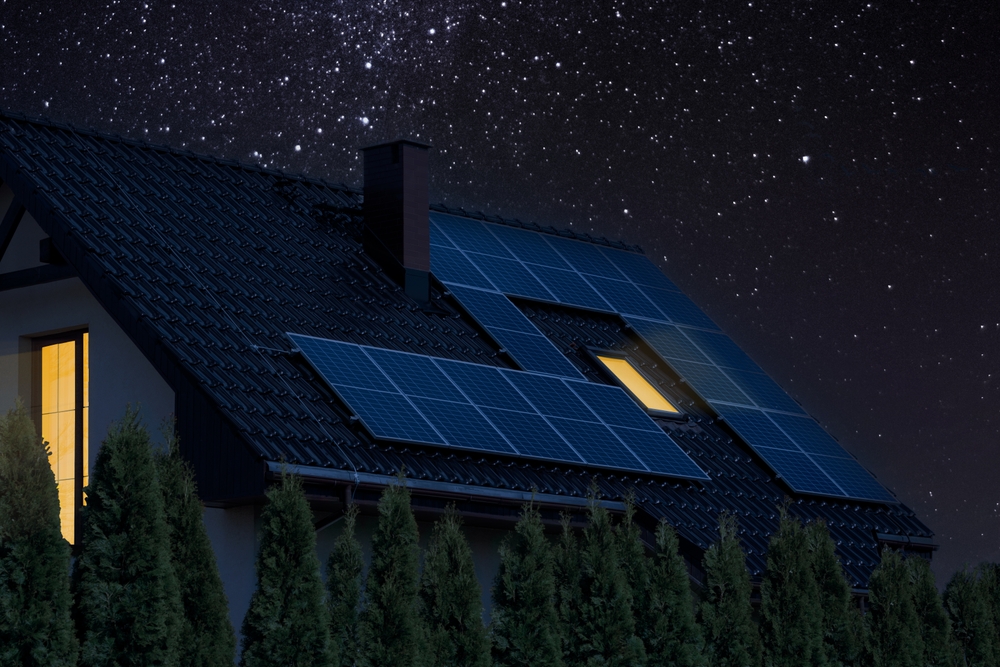
This is a popular option because solar panels are now more affordable than ever, they are low maintenance and these systems are scalable. There are two main types of solar panels: monocrystalline and polycrystalline. The former have higher efficiency, they take up less space, but the tradeoff is that they cost more. The latter are cheaper, the efficiency is slightly lower, but they are a good choice for larger roof areas.
To size the systems, determine your daily energy needs in Wh as we showed above. Then factor in the average sunlight hours per day for your location and season. Divide the daily Wh by those sunlight hours to find the panel wattage required to power your home.
In the northern hemisphere, the solar panels need to face true south and vice versa for the southern hemisphere. The tilt angle will affect the seasonal performance, flatter angles are better in summer and steeper angles work well in winter. For optimal performance, check the connections regularly and clean the panel surfaces to remove dust, snow, leaves and other debris.
Wind Turbines
These can be an excellent supplement to a solar panel system, if they are located in open areas that get 10-15 mph steady wind. A smaller residential wind turbine can produce 400-2,000w each. The main disadvantages are the unpredictability of the wind and the maintenance requirements. A periodic inspection of the blades, bearings and wiring will be necessary to keep the turbines working efficiently.
Hydropower
If your property has a steady flowing stream or river with an elevation drop, this is a viable option. The hydropower system can run throughout the year unless the water source freezes in winter.
The installation requires a turbine that has water pumped through an inlet to a generator. This can supply continuous energy and it’s more consistent than solar panels or a wind turbine.
Backup Generators
It’s wise to have a source of supplemental or emergency power to meet shortfalls. There are four fuel options: diesel, gasoline, biodiesel and propane. Due to the emissions and fuel storage considerations, these should not be considered to be a primary source of power. For short-term use, a cleaner source of backup power is a power bank charged from your off-grid system (more on this below).
Battery Selection
The use of batteries to store any surplus power to use on cloudy days or at night is essential for modern off-grid living. There are three battery types to consider, lead-acid, lithium-ion and flow batteries.
Lead-acid batteries are cheap, bulky and reliable, but they have the shortest lifespan. Lithium-ion batteries cost more, but they are efficient, they last longer and they are capable of deeper discharges. Flow batteries are expensive, but they are scalable and they tend to last longer than lead-acid or lithium-ion batteries.
Here is a simple battery storage formula to help you find your required battery size in kWh.
Battery Size (kWh) = (Daily Energy Use × Number of Storage Days) ÷ Depth of Discharge
- Daily Energy Use (kWh): The amount of energy used per day, measured in kilowatt-hours (kWh).
- Number of Storage Days: The number of days you want the battery to supply energy without recharging.
- Depth of Discharge (DoD): The percentage of the battery’s capacity that can be safely used without damaging it. For example, 80% DoD means you can use 80% of the battery’s total capacity.
To figure out the battery size you need, follow these two simple steps.
- Multiply your daily energy use by the number of days you want the battery to last.
For example, if you use 5 kilowatt-hours (kWh) per day and want the battery to last 3 days:
5 kWh × 3 days = 15 kWh. - Divide that number by the battery’s depth of discharge (DoD).
Depth of discharge is how much of the battery’s capacity you can safely use. For a lithium battery with an 80% DoD (0.8), divide the total energy by 0.8:
15 kWh ÷ 0.8 = 18.75 kWh.
Result: You need a battery with a capacity of 18.75 kWh to meet your needs.
This calculation ensures your battery can power your home or device for the desired time without running out of energy. Keep in mind that real-world factors like energy losses may require a slightly larger battery.
The Inverter
Most off-grid systems generate direct current (DC) power, but appliances tend to run on alternating current (AC) power. So, an inverter is required to convert the DC to usable AC power.
There are two choices, pure sine wave and modified sine wave inverters. The former is more expensive, but it’s compatible with sensitive electronics. The latter is cheaper, but it can be inefficient in certain devices and it may generate a humming sound.
The inverter needs to be properly sized to handle a peak load with all your devices running at the same time.
Growing, Preserving and Cooking Food
Those that choose to go off-grid are likely to want to grow their own food to reduce their reliance on grocery stores. A small well planned garden can generate a surprising amount of food and focusing on expensive plants can significantly lower your food budget.
The best place to start is low-maintenance and high-yield crops, such as: potatoes, beans, tomatoes and carrots. Learn about seasonal planning to avoid frost and increase your yields. Use crop rotation, mulching and composting to improve the soil health and keep your land fertile and productive.

If you venture into raising animals for eggs, milk and meat, bear in mind the ethical considerations and care requirements. Goats are hardy animals, but they can be tough to manage for beginners. Certain chicken breeds are very beginner-friendly, but they must be kept in pristine conditions. Rabbits have become a popular choice because they are easy to care for and they can provide a surprising amount of meat.
Food storage shouldn’t be reliant on a refrigerator and freezer in a well planned off-grid setup. The most energy efficient ways to store the food you grow are canning, fermentation, dehydration and a root cellar. Off-grid cooking is typically a mix of wood, gas or propane stoves, solar ovens and electric induction which are energy efficient options.
Waste Management
If you choose to live off-grid, you will need to manage your own human waste and trash issues. A composting toilet is a popular choice, it separates liquid from feces to turn the human waste into compost for the garden. No water is needed for flushing and it’s an eco-friendly option. But, proper composting techniques need to be learned to avoid potential health hazards and bad odors.
A more conventional approach is to install a septic system that will need to be periodically pumped and emptied. Adding a greywater system that collects used water from the sinks, laundry and showers for irrigation is a sensible choice.
But, you shouldn’t use grey water that contains detergents or harsh chemicals on plants that you’re growing to eat.
Any trash that can be recycled should be stored for the occasional trip to the nearest waste disposal facility. For certain surplus and waste materials, some off-grid communities have a barter system in-place.
Going Off-Grid
It’s easy to believe that a transition to an off-grid lifestyle is too hard when you consider how much you need to know. But, in reality you can get a long way with some curiosity, an internet connection and basic DIY skills. Many people have successfully made the transition and they learned what they needed to know along the way.